
About — Heather Reis, LICSW
Everything I've done
has led me Here.
I don't think my work began when I became a therapist. I think it began much earlier.
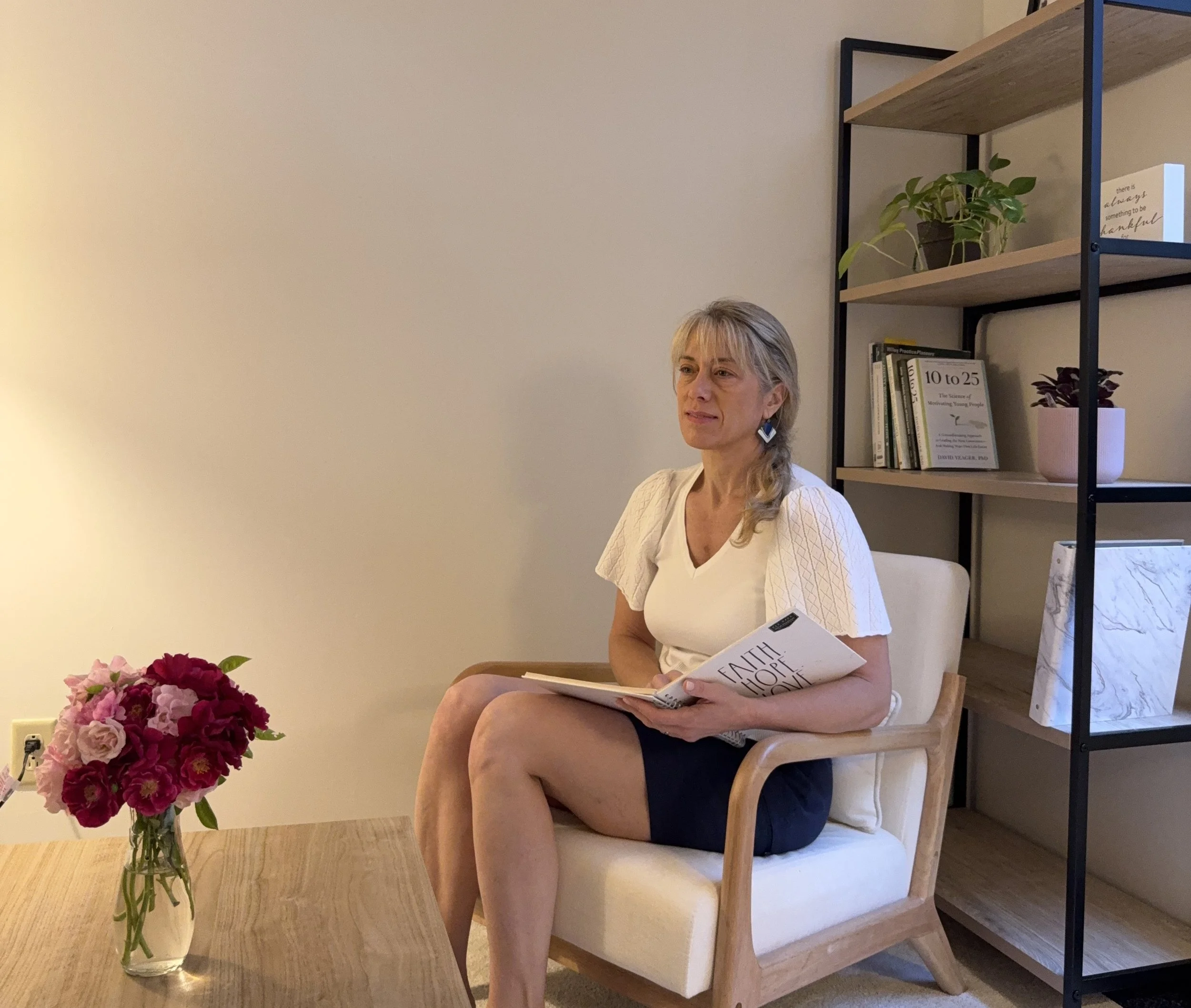
Where the question beganAs a little girl, I remember sensing there was so much happening around me that no one talked about.
I grew up in a family where feelings weren't explored very much. There wasn't a lot of conversation about what people were experiencing beneath the surface. And when I had big feelings of my own, the message, whether spoken directly or quietly communicated, was clear:
Don't be difficult.
Don't be stubborn.
Don't be angry.
I remember wondering why.
Why did people say one thing but seem to feel another?
Why did everyone pretend everything was fine when it clearly wasn't?
Why were some emotions acceptable while others needed to be hidden?
I didn't have the language for it then, but I had already begun asking the question that has stayed with me my entire life:
What's really happening here?
That question has followed me everywhere.
It followed me into teaching, where I found myself wondering about the child behind the behavior.
It followed me into school leadership, where I became just as interested in supporting teachers and parents as I was students.
It followed me into therapy and coaching, where I discovered that whether I was sitting with a teenager, a parent, or an adult navigating a difficult season, I was still asking that same question.
What's happening beneath the surface?
Because over the years, I've become convinced that people make far more sense than we often give them credit for.
When we understand the story beneath the behavior, judgment begins to soften.
Curiosity takes its place.
And that's where healing, connection, and lasting change become possible.
Looking back now, I can see that everything I've done has led me here. Not just professionally, but personally.
Every role I've held, every relationship I've navigated, every challenge I've faced has deepened my belief that people don't need more judgment.
They need more understanding.
The Foundation
Parent
Educator
School Administrator
Therapist
I've been a parent sitting at the kitchen table, wondering what to do next. I've stood in classrooms, school offices, and therapy rooms. And across every role, one truth has stayed the same.
The moments that shape us most are rarely the ones we feel prepared for.
For over 30 years, I've worked with children, teens, and families. I've sat in classrooms, in offices, and across from parents trying to understand what's happening with their child and within themselves.
Over thirty years, I've seen what it looks like when the moments that matter most catch us off guard.
When behavior is asking for understanding
When what a child or teen is showing us gets read as a problem to solve, rather than a message to hear.
When emotions are louder than words
When feelings escalate faster than we can keep up with them — leaving everyone reactive, exhausted, and stuck.
When connection feels impossible
When the distance grows in the relationships that matter most — sometimes slowly, sometimes all at once.
And I've also seen something else. That when we begin to understand what's underneath those moments — when we slow things down just enough to see what's really happening — everything starts to shift. Not all at once, but in ways that are real and lasting.
The goal isn't perfection. It's learning how to return to yourself and the people you love, again and again.
Heather Reis, LICSW
What I believe
I don't believe this work is about getting it right.
I believe it's about learning how to return.
To yourself. To your awareness. To the people you love. Again and again.
01
Behavior is communication.
Every action tells a story. When we learn to listen beneath the surface, everything changes.
02
Disconnection is information.
When relationships strain, that distance is telling us something. It's not a dead end — it's a doorway.
03
Repair is where trust grows.
We don't have to get it right the first time. We just have to know how to come back.
You don't have to have everything figured out before you begin.
Whether you're looking for therapy, coaching, or simply trying to understand what's happening beneath the surface, you don't have to navigate it alone.
The first step isn't having the perfect words.
It's simply being willing to begin.