
About — Heather Reis, LICSW
Everything I've done
has led me Here.
I don't think my work began when I became a therapist. I think it began much earlier.
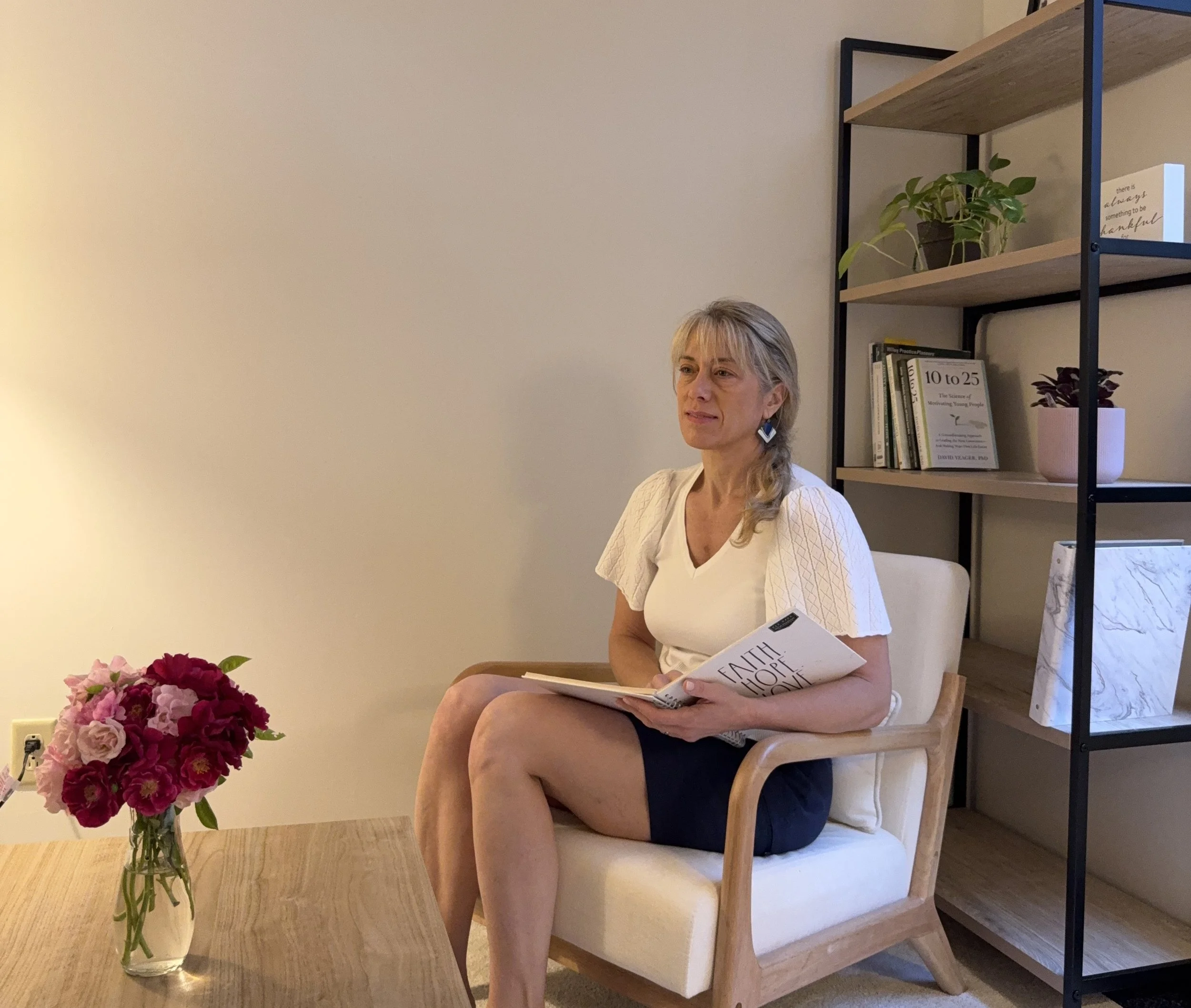
Where the question beganAs a little girl, I remember sensing there was so much happening around me that no one talked about.
I grew up in a family where feelings weren't explored very much. There wasn't a lot of conversation about what people were experiencing beneath the surface. And when I had big feelings of my own, the message, whether spoken directly or quietly communicated, was clear:
Don't be difficult.
Don't be stubborn.
Don't be angry.
I remember wondering why.
Why did people say one thing but seem to feel another?
Why did everyone pretend everything was fine when it clearly wasn't?
Why were some emotions acceptable while others needed to be hidden?
I didn't have the language for it then, but I had already begun asking the question that has stayed with me my entire life:
What's really happening here?
That question has followed me everywhere.
It followed me into teaching, where I found myself wondering about the child behind the behavior.
It followed me into school leadership, where I became just as interested in supporting teachers and parents as I was students.
It followed me into therapy and coaching, where I discovered that whether I was sitting with a teenager, a parent, or an adult navigating a difficult season, I was still asking that same question.
What's happening beneath the surface?
Because over the years, I've become convinced that people make far more sense than we often give them credit for.
When we understand the story beneath the behavior, judgment begins to soften.
Curiosity takes its place.
And that's where healing, connection, and lasting change become possible.
Looking back now, I can see that everything I've done has led me here. Not just professionally, but personally.
Every role I've held, every relationship I've navigated, every challenge I've faced has deepened my belief that people don't need more judgment.
They need more understanding.
How I came to see people differentlyA widening perspective, one chapter at a time.
As a teacher, I wondered about the child who couldn't sit still, the one who shut down, the one who acted out, or the one who seemed invisible. Instead of asking, "How do we stop this behavior?" I found myself asking, "What is this child trying to tell us?"
When I became a school administrator, my perspective widened. I wasn't just supporting students anymore. I was supporting teachers, parents, and entire families. I began to see how everyone was carrying their own experiences, fears, and stories into the same situation. What looked like conflict on the surface was often a collection of people trying their best to be understood.
Becoming a parent deepened that understanding even more.
Like so many parents, I made mistakes. I questioned myself. I learned that children don't simply respond to what we say, they respond to what we carry. My own children became some of my greatest teachers, reminding me that relationships are living, growing things, and that repair is often more powerful than perfection.
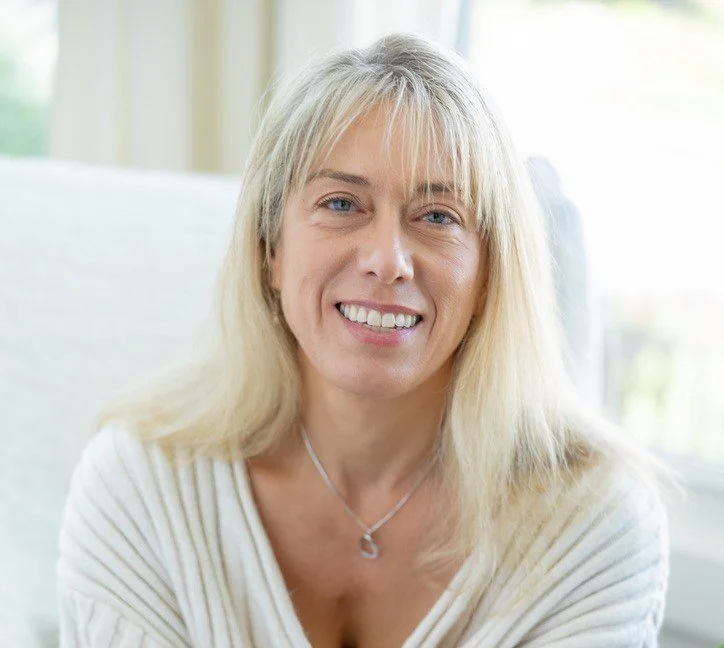
"I wasn't learning an entirely new way of seeing people. I was finally finding the language for the way I had always seen them."
When I eventually became a therapist, something unexpected happened.
I realized I wasn't learning an entirely new way of seeing people. I was finally finding the language for the way I had always seen them.
Whether I was sitting with a teenager struggling with anxiety, a parent feeling overwhelmed, or an adult trying to navigate a difficult transition, I kept coming back to the same truth:
People make sense.
Not because every behavior is healthy or helpful, but because every behavior has a story.
The more I understood trauma, attachment, nervous systems, family dynamics, and human development, the more convinced I became that lasting change rarely begins with advice.
It begins with understanding.
Today, that belief shapes every conversation I have.
Before we ask, "How do we fix this?" I want to understand.
Before we judge a behavior, I want to know what it's protecting.
Before we assume someone doesn't care, I wonder what they're afraid of.
I've learned that when we replace judgment with curiosity, people begin to see themselves and one another with more compassion.
And from that place, change becomes possible.
What I've Come to Believe
Over the years, I've discovered that the questions I've been asking since childhood have led me to a few simple truths.
I don't believe people need fixing.I think they need understanding.I've come to see behavior differently. Whether it's anxiety, anger, perfectionism, withdrawal, people-pleasing, or conflict, I don't see these as signs that something is wrong with us. I see them as clues. They are often the ways we've learned to protect ourselves, meet our needs, or make sense of the world.
I've learned that curiosity changes relationships.The moment we stop asking, "What's wrong with you?" and begin wondering, "What makes this make sense?" something begins to shift. Judgment softens. Compassion grows. Connection becomes possible.
I've also come to believe that no two people experience the world in exactly the same way.
We each move through life carrying our own history, relationships, nervous system, fears, hopes, and beliefs. Those experiences shape how we interpret the world around us. Two people can live through the very same moment and walk away with completely different experiences of what happened.
My work isn't to decide whose perspective is right.
It's to help people understand themselves and one another well enough to create more connection.
Somewhere along the way, I also stopped believing that our goal is to become someone new.
I began to believe something very different.
I think most of us are trying to find our way back to ourselves.
Beneath the expectations, protective patterns, fear, and roles we've learned to play is the person we've always been.
My work is helping people remember that person.
I've learned that healing doesn't happen because someone gives us all the answers.
It happens because we begin asking different questions.
Questions that invite understanding instead of shame.
Questions that create connection instead of distance.
Questions that remind us we are far more than our hardest moments.
And perhaps most of all, I've come to believe that the deepest freedom we can experience isn't the freedom to be perfect.
It's the freedom to simply be.
To me, that's the quiet revolution.
Connection is the rebellion.
How I Return to Myself
One of the greatest lessons I've learned is that we all drift away from ourselves from time to time.
Life gets busy. Stress takes over. We move into roles, responsibilities, and expectations. Before we know it, we've lost touch with the parts of ourselves that make us feel most alive.
I've learned not to expect that I'll stay perfectly connected to myself.
Instead, I've learned to recognize what helps me find my way back.
For me, that often begins with movement.
Whether I'm strength training, hiking, backpacking, surfing, or simply walking outside, movement has become one of the ways I reconnect with myself. It reminds me that we aren't just minds trying to think our way through life. We are whole people…body, mind, heart, and spirit. And, sometimes the next step forward begins by simply taking a step.
Writing is another way I return.
Not because I'm trying to create something, but because writing has always been one of the ways I make sense of the world. My notebooks are filled with questions, observations, ideas, and reflections that help me understand both myself and the people around me.
I return through the people I love.
Time with my children and granddaughter. Conversations that stretch late into the evening because we're curious enough to keep asking one more question. Working in the garden. Paying attention to the small moments that are so easy to overlook.
I've come to realize that these aren't distractions from my work.
They are what allow me to do it.
They remind me that growth rarely happens in dramatic leaps.
More often, it happens quietly.
In conversations.
In relationships.
In reflection.
In movement.
In the courage to come back to ourselves, again and again.
I don't think curiosity is something I turn on when I begin a session.
It's simply how I've learned to move through the world.
I still find myself wondering.
About people.
About relationships.
About what helps us grow.
About what brings us home to ourselves.
And I have a feeling I always will.
If you're feeling disconnected from yourself, your relationships, or simply the life you want to be living, I'd be honored to walk alongside you.
Together, we'll make sense of where you are, become curious about what your experiences have been trying to show you, and help you find your way back to yourself.
You don't have to have it all figured out before you reach out.
You simply have to be willing to begin.
Because no matter how far we've wandered, there's always a way back.
Licensed Independent Clinical Social Worker, Massachusetts (LICSW #123931) · Licensed Clinical Social Worker, Connecticut (LCSW #014152)